Operationalizing GenAI: From Fragmented Pilots to a Unified Ecosystem
Established the foundational interaction patterns that scaled Agentic AI across 5 core product lines, reducing engineering redundancy and accelerating time-to-market.



Role & Goal
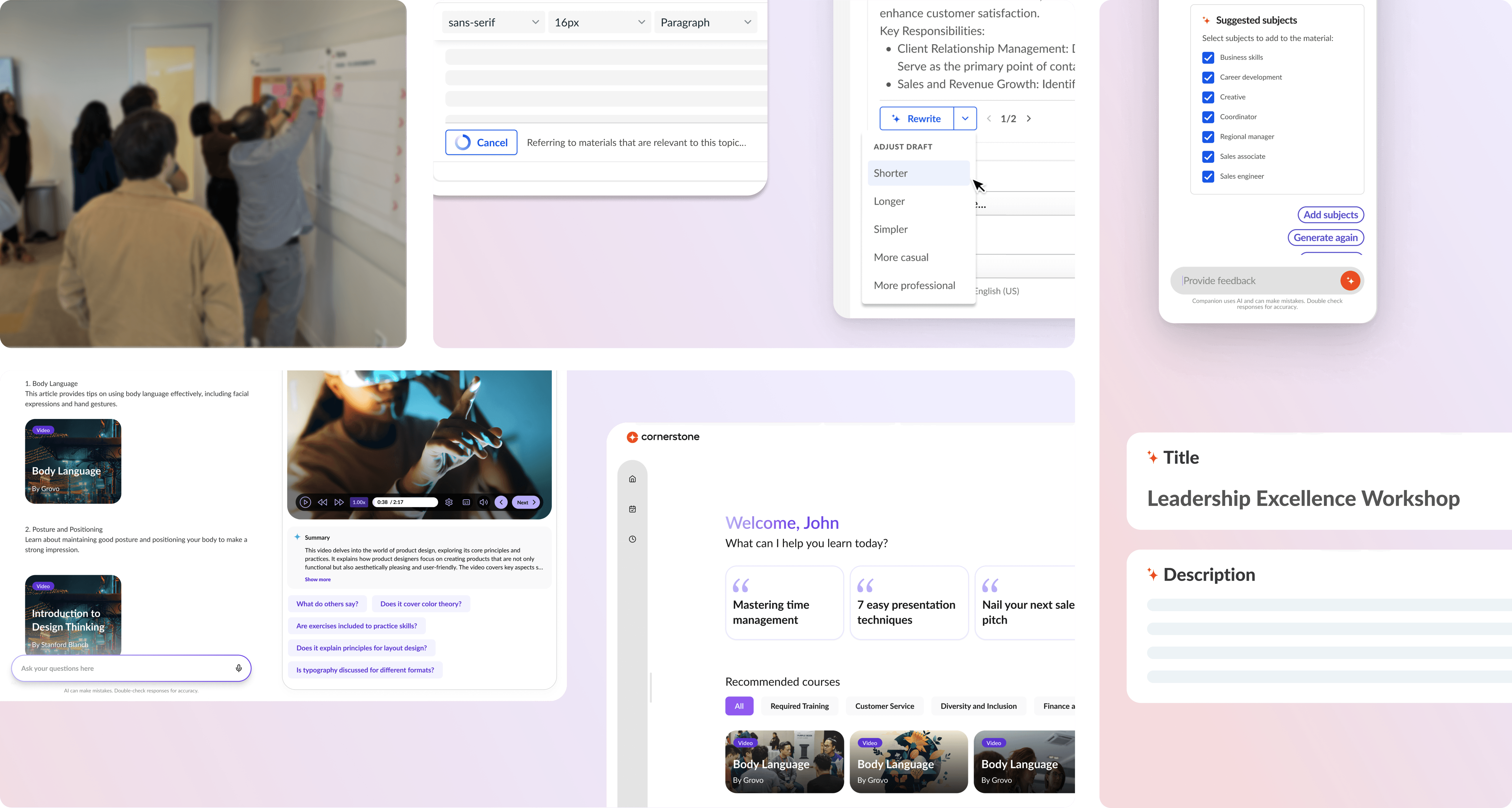
Served as the main contact for AI-enabled experiences at Cornerstone, leading the Admin experience and partnering with another designer on the Learner experience. Reviewed AI use cases and recommended new design patterns and components.
My role spanned
•
Define AI design pattern
•
Influence AI-enabled design direction
•
Evangelize AI-enabled guideline
•
MVP development
•
Leading and hosting workshops
Key Results

Shattered Boundaries
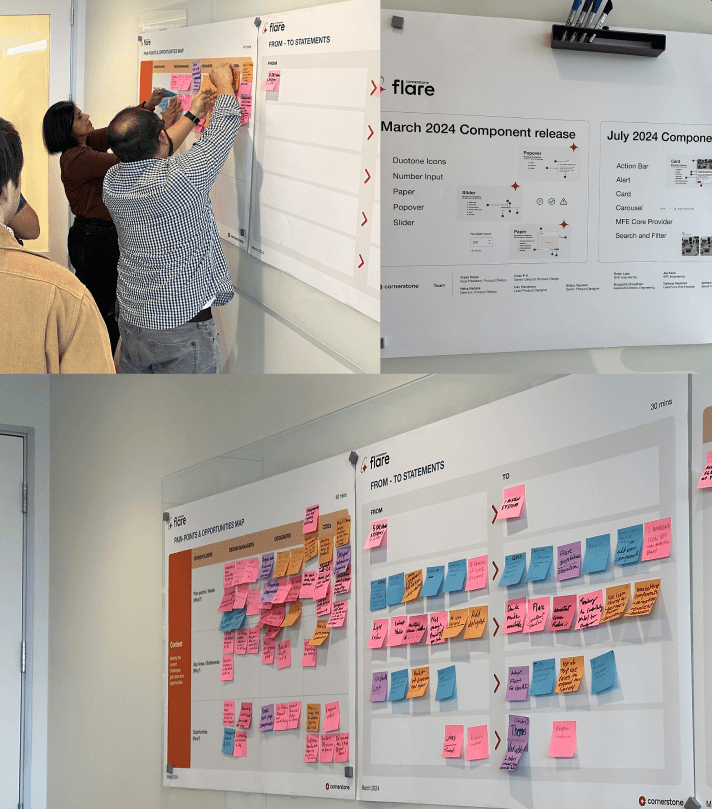
Introducing AI guidelines into product strategy workshops helps teams shape cohesive AI interaction design.

Solved multiple complex product use cases
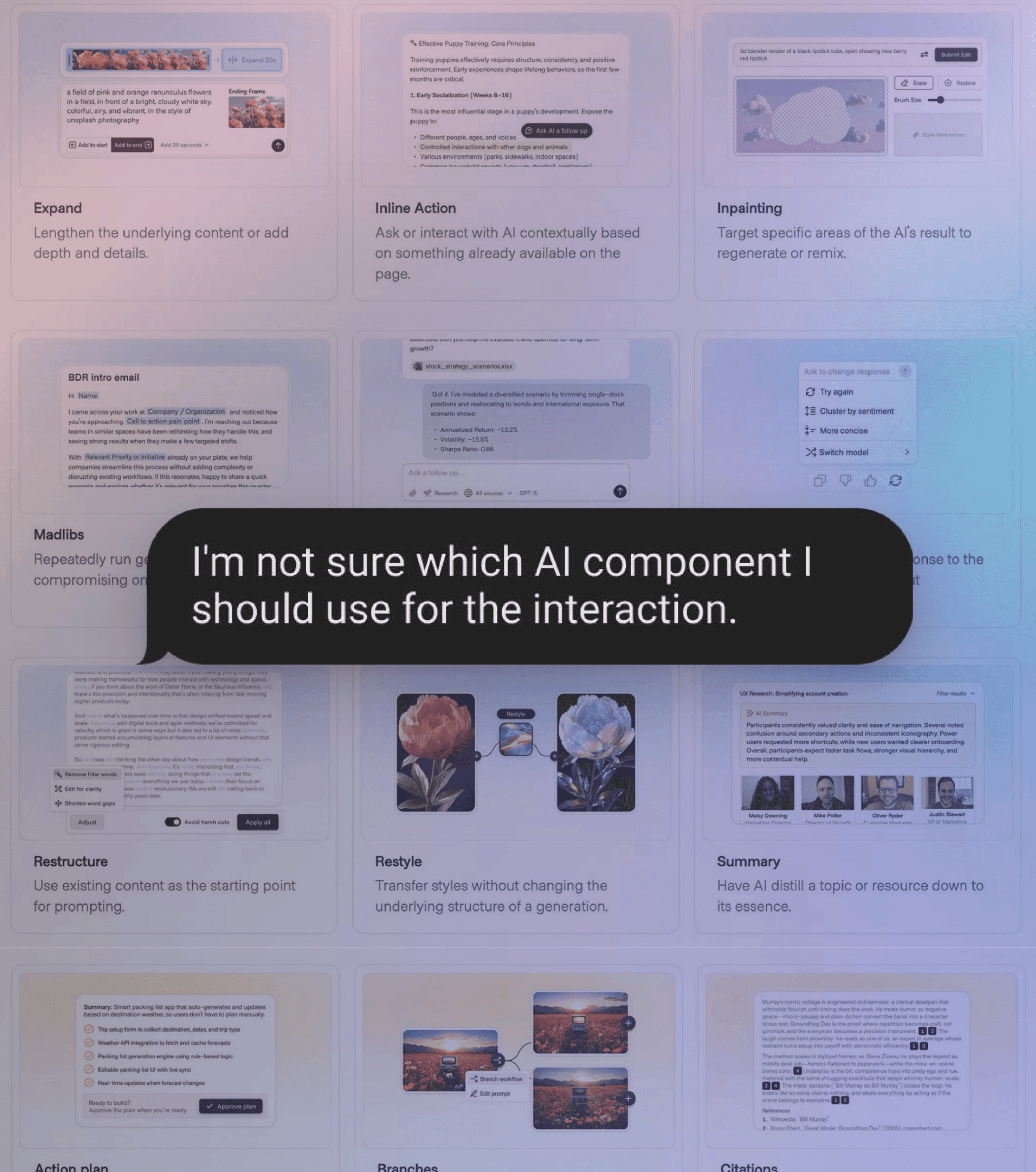
Established AI interaction patterns by incorporating design requests gathered from product planning workshops.

Reduced inconsistency and redundant work
Implementing a centralized AI design patterns & components ensured cohesive experiences and eliminated redundant development efforts.

2.5k beta AI interactions
The AI Companion generated 2,500 navigation searches in its first beta month, showing strong early engagement and practical value for daily admin tasks.

50% estimated task-time reduction
The new design delivered strong usability signals, earning a 4.5/5 ease-of-use score in testing. Every participant completed the task successfully, reinforcing the clarity of the redesigned workflow.

5 AI-enabled features shipped / planned
Five new AI capabilities were released or planned across products, bringing assistance, recommendations, and intelligent summarization into core flows.


Quality, Context, and the Efficiency Gap in AI Workflows
User testing revealed skepticism regarding the quality and contextual accuracy of AI outputs, suggesting a need for increased human oversight. However, the current workflow failed to save time due to excessive manual data entry for fields the system should have inferred automatically. This highlights a critical design challenge: effectively balancing Augmentation and Automation to minimize manual friction while ensuring the generated content remains meaningful and under user control.
Customer Feedback:
"This doesn’t save me much time. There are still too many fields to fill out. If I have to enter all of that manually in the UI, the benefit is minimal."
"I need more control over the process."
"The results are disappointing."
"The AI lacks the necessary context."
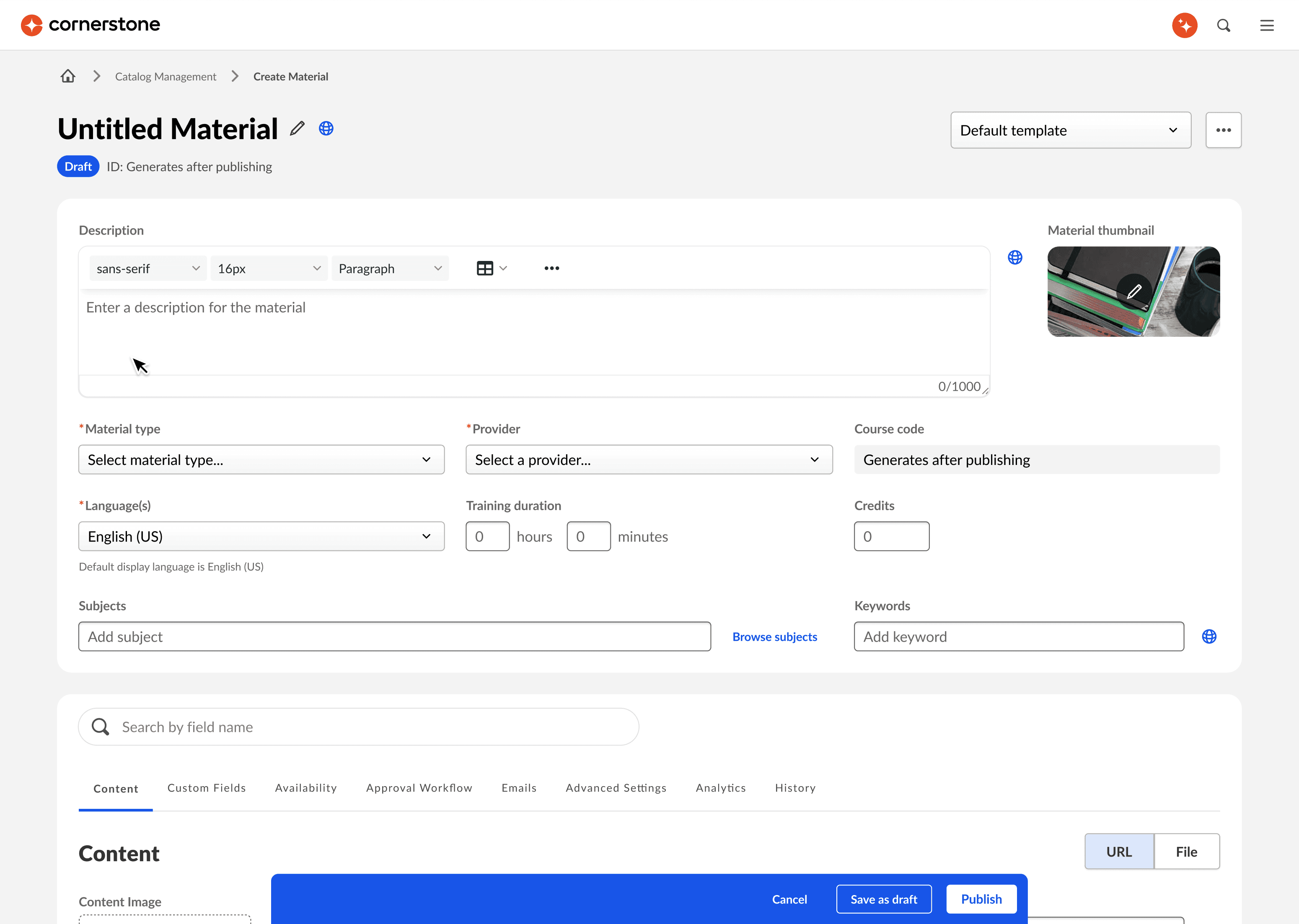

Idea: What if we guide the user through the workflow, allowing context to accumulate as steps progress to generate higher quality content
AI-Guided Step-by-Step Content Refinement. Better context = Better output

Shifting Paradigm: From "Chatting" to "Working"
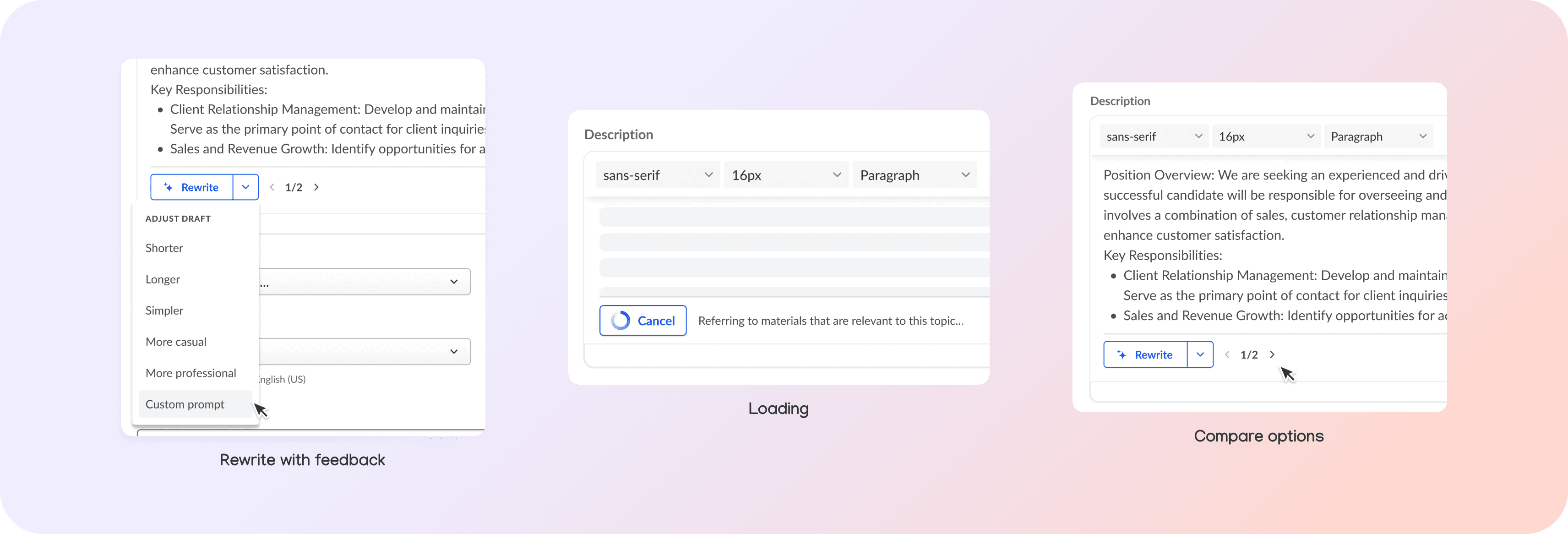
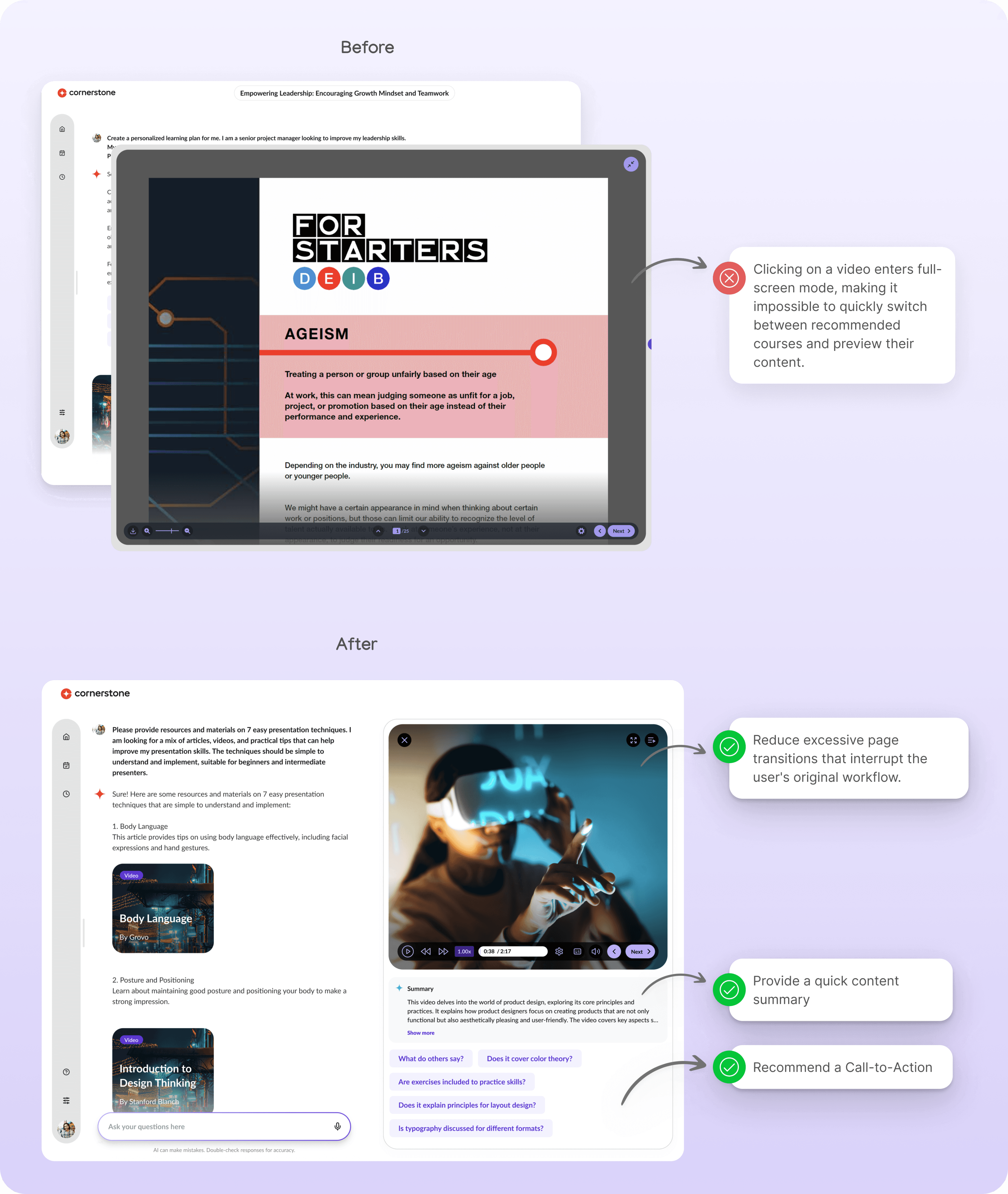
We moved beyond the generic 'Chatbot' pattern. I defined an Agentic Interaction Model centered on 'Human-in-the-loop' workflows. This approach allows the AI to perform complex tasks (drafting, summarizing, analyzing) while ensuring the user remains the final decision-maker.
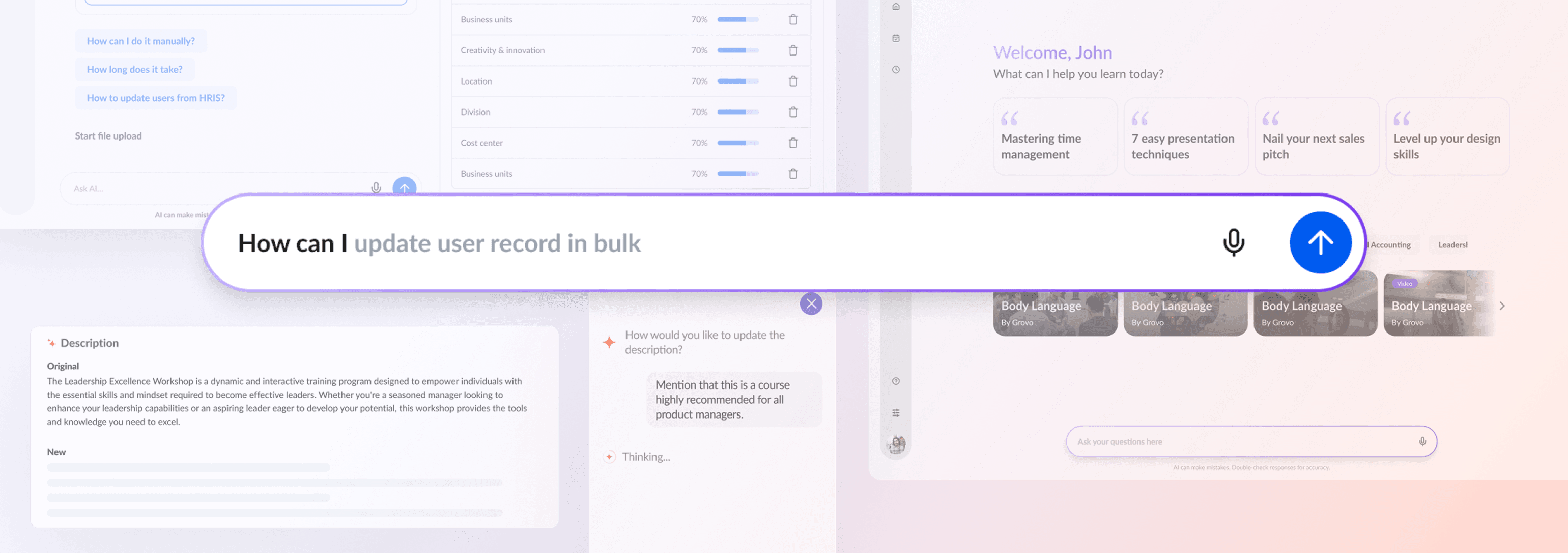
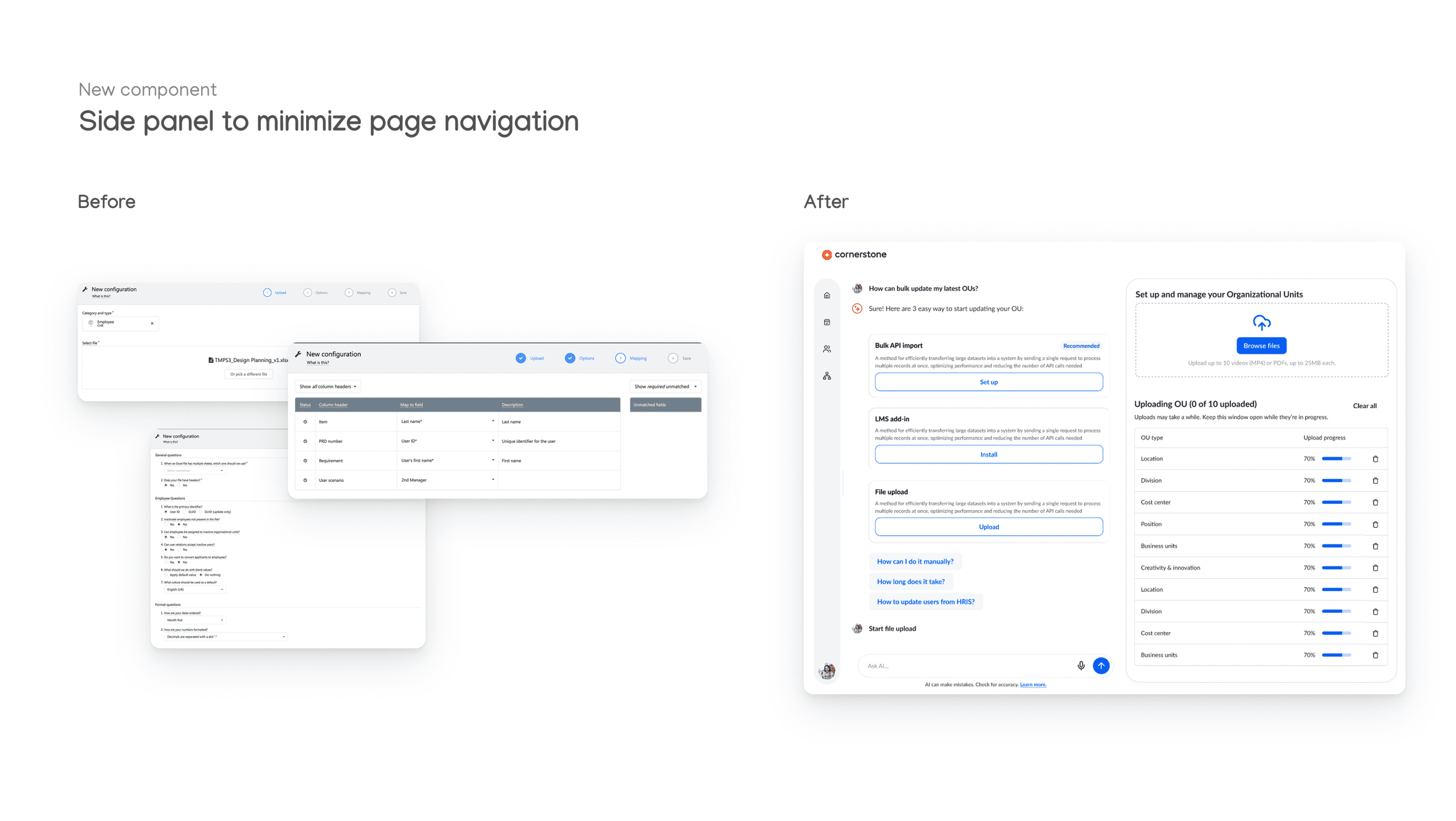
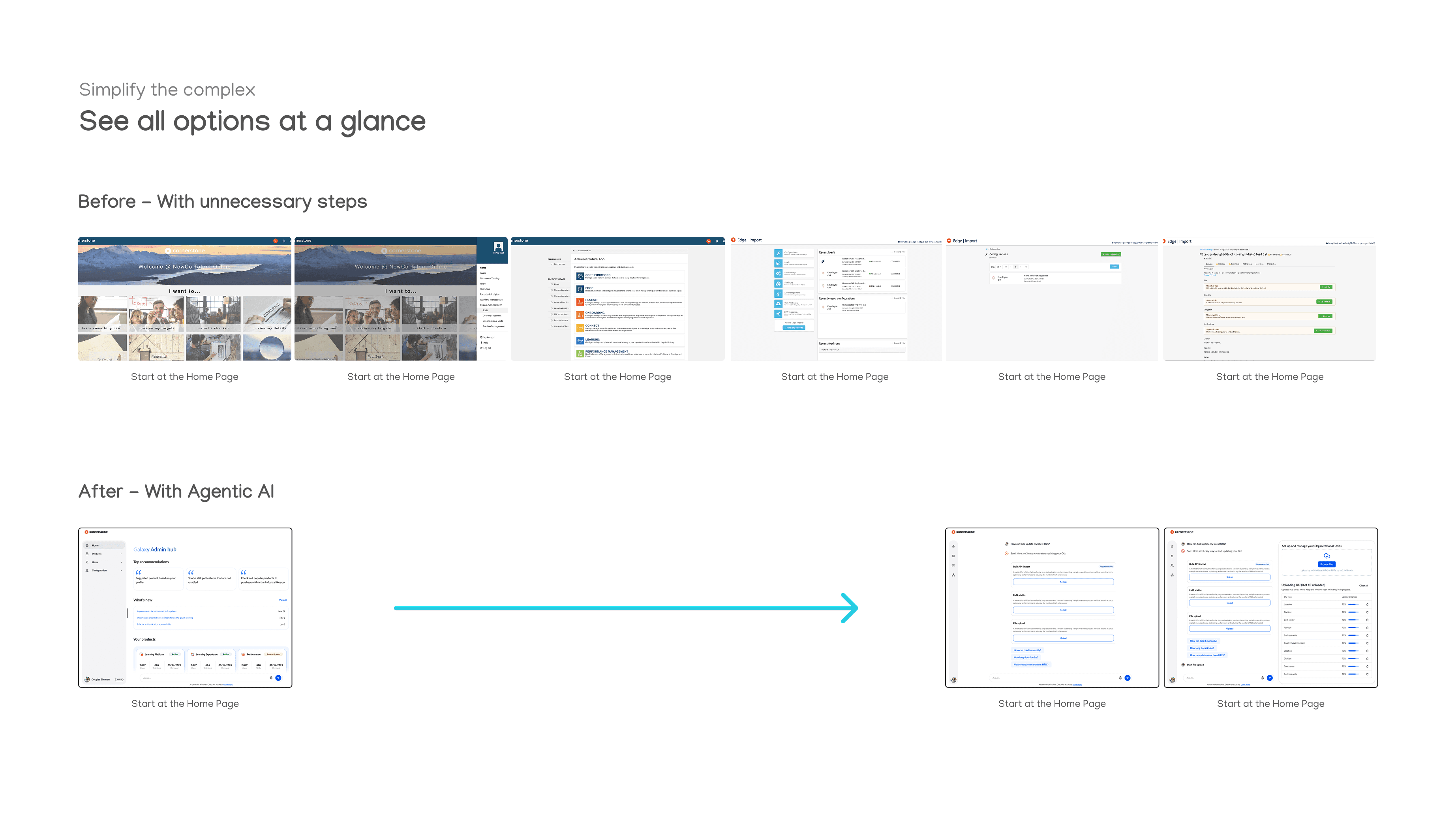

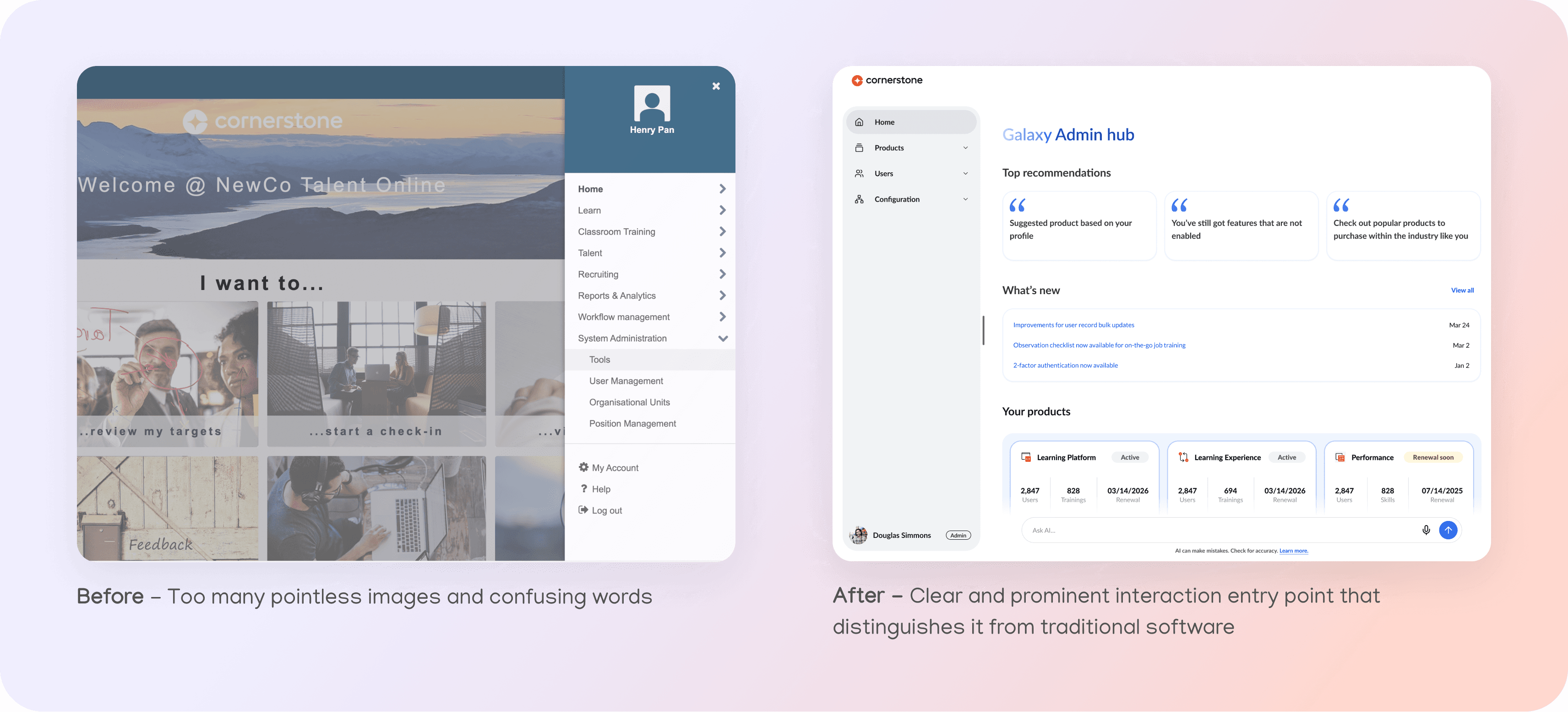
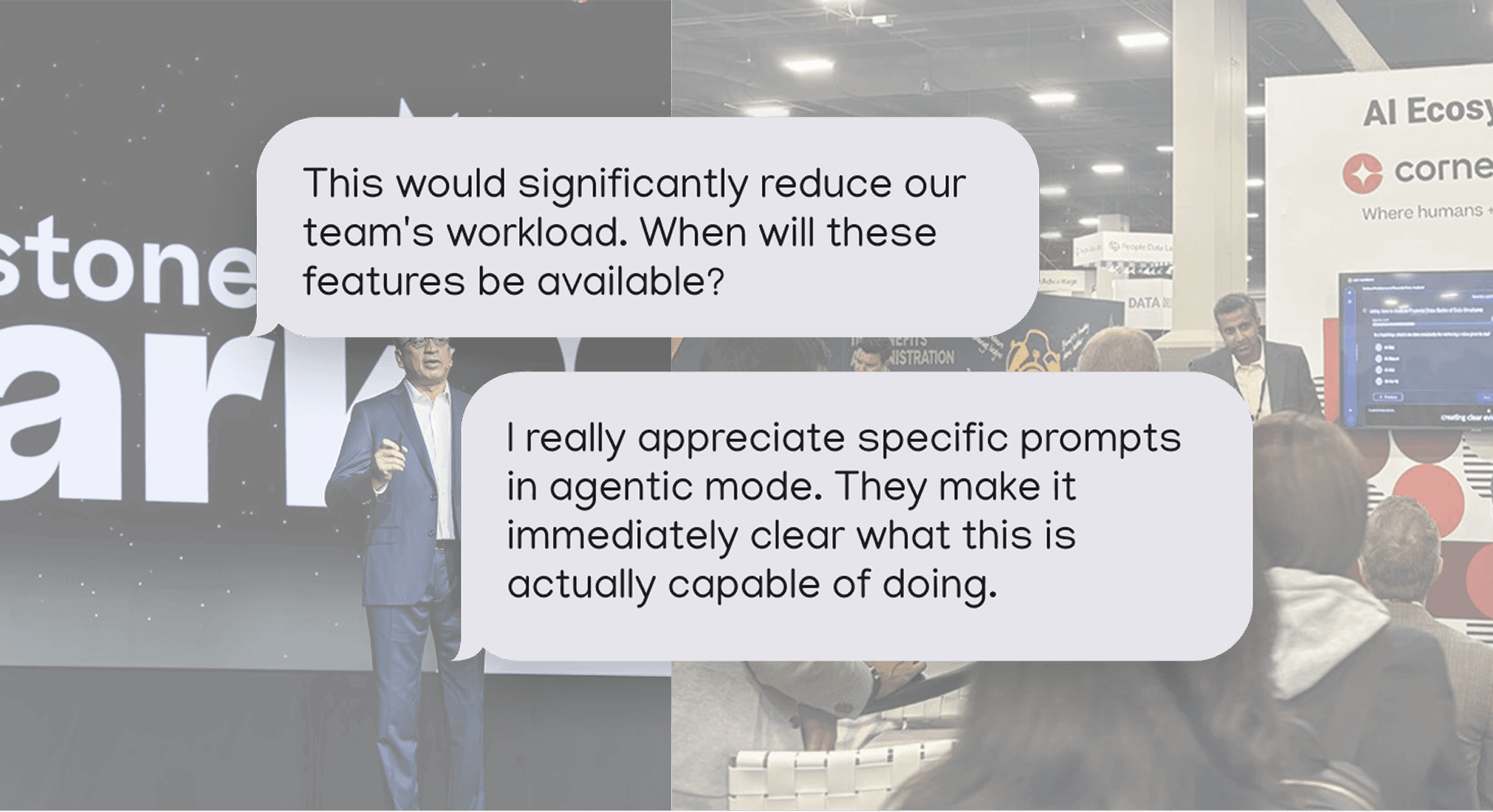
“I got confused about what this agentic mode is capable of and how it works”
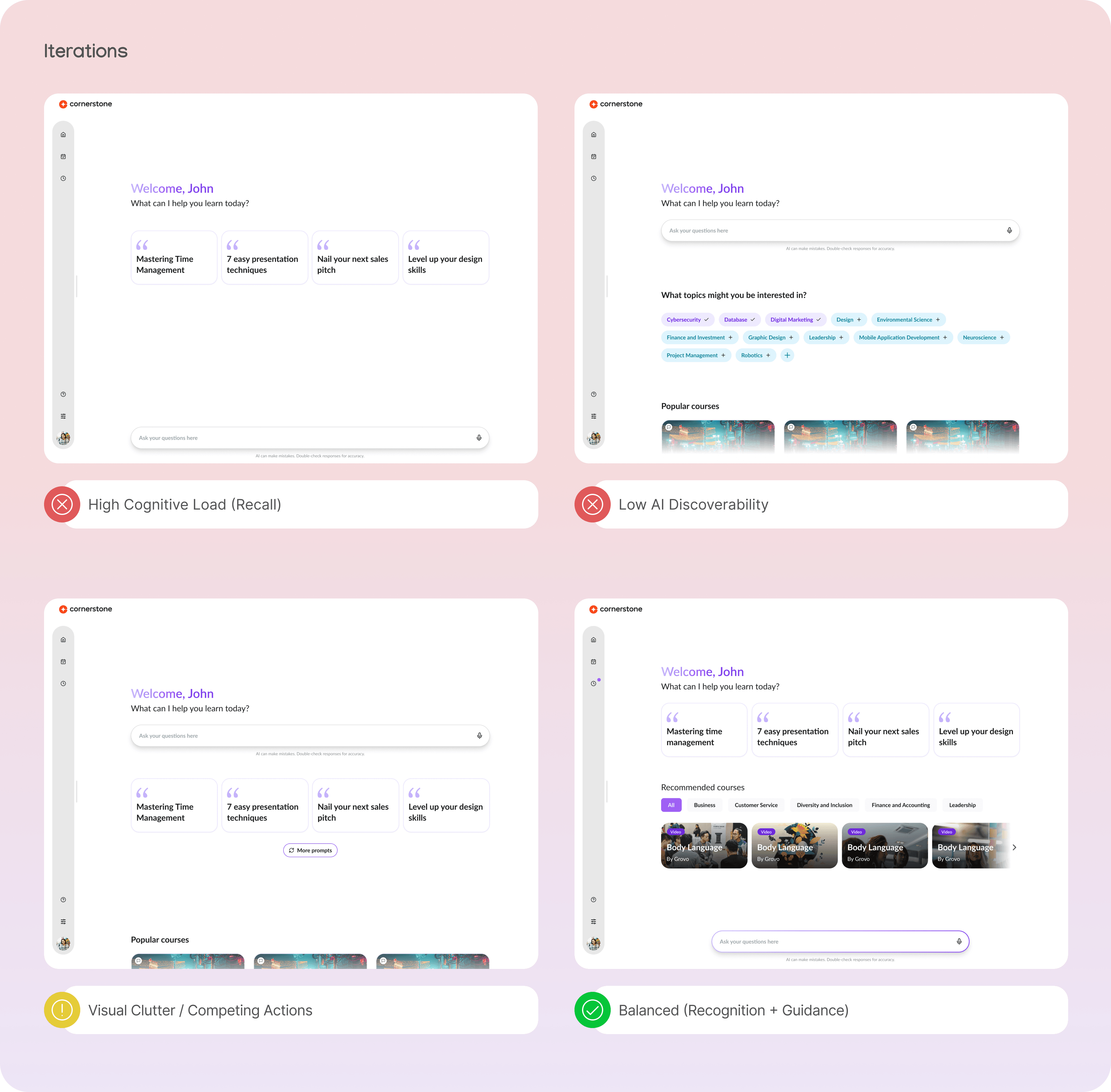
Design Iteration: Reducing the "Blank Canvas" Effect
Designing for an AI-first learning platform presented a unique challenge: How do we integrate the power of Large Language Models (LLM) without overwhelming the user with an empty text box?


Impact: Defining the "AI-First" Strategy
We introduced Generative AI across key product workflows to accelerate search, simplify decision-making, and reduce admin effort. Early releases demonstrated meaningful adoption and time-savings, while design-system integrations and cross-team workshops established scalable patterns for future AI-driven experiences.
2.5k
beta AI interactions
The AI Companion generated 2,500 navigation searches in its first beta month, showing strong early engagement and practical value for daily admin tasks.
50%
Task-time reduction
The new design delivered strong usability signals, earning a 4.5/5 ease-of-use score in testing.
Every participant completed the task successfully, reinforcing the clarity of the redesigned workflow.
5
Features shipped / planned
Five new AI capabilities were released or planned across products, bringing assistance, recommendations, and intelligent summarization into core flows.
2
strategic opportunities
Gen AI + Design System workshops surfaced two high-impact opportunities streamlining component creation and accelerating concept-to-design productivity.

User and clients appreciate the final solution for ease of use and clarity
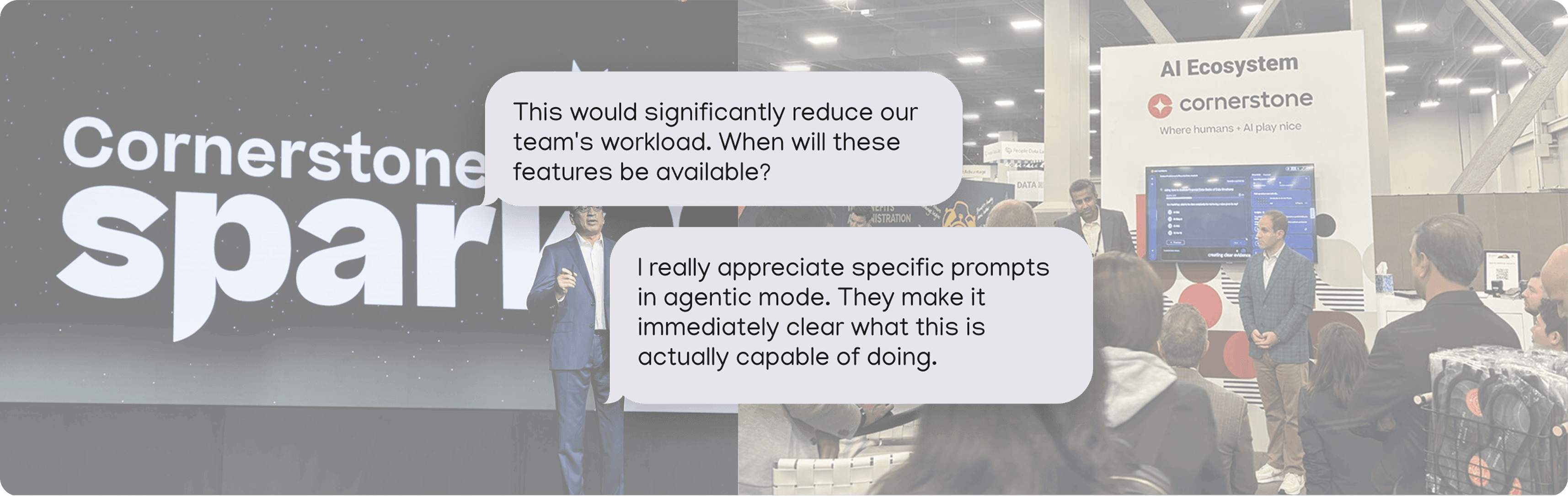
"This work was pivotal to our market strategy and was showcased as the headline innovation at Connect Live, Cornerstone's global customer conference, demonstrating our commitment to an AI-first future."